Digitization
Digital Accessibility
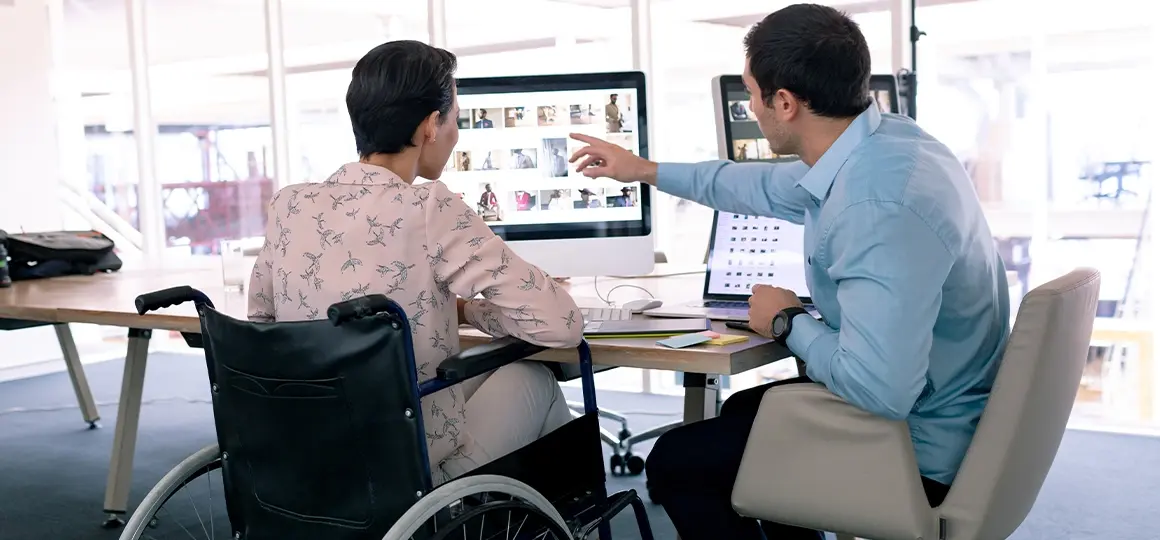
AI and automated accessibility tools can identify many technical issues, but they cannot reliably determine whether an entire digital experience is accessible and usable in context.
They can scan large volumes of content, flag rule-based issues, and identify potential accessibility failures quickly. But detecting a potential issue is not the same as determining its impact, interpreting it in context, or verifying that the experience works for users. Those steps require human evaluation.
This matters beyond websites, across web applications, PDFs, eBooks, digital documents, and multimedia. The goal is not to choose between automation and human expertise, but to use each where it works best. This blog explores seven accessibility issues AI testing still struggles to catch, what automation does well, and where expert review and human validation remain essential.
Automated accessibility testing can catch a lot of technical issues, but it cannot always tell us what the experience is actually like for a user. These seven areas are where a closer human review can make a difference.
Detecting missing alt text is relatively straightforward for automated tools. The harder question is whether the description communicates what an image is meant to convey. A figure, chart, or editorial image may require different treatment depending on its purpose and surrounding content. Human reviewers can consider the surrounding context and judge whether the description accurately reflects the image’s purpose and gives users the relevant information.
Automated tools can identify structural patterns, but they may not recognise whether the content makes sense in the order it is presented. Human review can help determine whether the information follows a logical sequence and is easy to follow.
For a deeper look at how AI struggles with complex document structures, read - The Real Limits of AI PDF Remediation for ADA Compliance.
Automated checks can flag some keyboard and focus issues, but they cannot always tell whether navigation actually feels clear and predictable. Human reviewers can test whether users can move through interactive elements in the right order, see where focus is, and use menus, dialogs, and other components without getting stuck or confused.
A form can have technically correct labels and still be difficult to complete. But, human reviewers assess whether instructions are clear, errors are understandable, validation behaves as expected, and important updates are communicated to users.
Tabs, modals, carousels, filters, accordions, and other dynamic components can pass individual automated checks while still creating problems during actual use. The question is not simply whether these elements exist, but whether users can operate them, understand changes on the screen, and move through the experience predictably.
Individual elements can pass automated checks while the overall experience still presents accessibility barriers. A human reviewer looks at what happens from one step to the next and whether the different elements work together without creating problems for the user.
This is where automated testing has its clearest limitation. Automated tools evaluate predefined rules, while human reviewers can assess whether someone can actually complete a task using the experience. Expert review, assistive technology testing, and appropriate user testing can reveal barriers that rule-based checks cannot identify, such as confusing workflows, unexpected behaviour, or difficulty completing an important task.
Automation still has an important role in accessibility testing. The point is to use it for what it can detect quickly and consistently, while leaving the areas that need context and judgment to human reviewers.
AI accessibility testing and automated accessibility testing are related, but they are not exactly the same. Automated tools rely on predefined rules to flag potential issues, while AI-powered tools can use machine learning to assist with analysis or classification. Neither approach replaces human evaluation.
It is particularly useful for:
The question is not whether to use AI for accessibility testing. It is where AI should stop and human evaluation should begin.
The most effective approach combines automated testing with human validation rather than relying entirely on either one. Automation provides speed and broad coverage, while human review helps determine whether the issues identified actually affect the user experience.
Automated testing → Expert review → Assistive technology testing → User testing → Remediation → Retesting
It starts with automated testing to flag potential issues across large volumes of content. An expert then reviews those findings to understand what they mean in practice and spot anything the automated checks may have missed. Assistive technology testing shows how the experience works with tools people with disabilities may use, while user testing helps confirm whether they can complete the tasks they need to. Any issues found are then fixed and tested again to make sure the changes work as intended.
This approach can be used across websites, web applications, PDFs, eBooks, digital documents, and multimedia, with the specific testing methods adapted to each type of content.
AI can increase the speed and scale of accessibility testing. Human expertise determines whether the experience actually works for users.
Automated testing can check large amounts of content and flag issues quickly, but it cannot replace the understanding that comes from expert review, assistive technology testing, and seeing how people actually use the experience. The strongest accessibility program's use automation to handle what it does well while bringing human expertise into the areas where it matters most.
If you want to understand where your website may be creating accessibility barriers, start with a comprehensive accessibility audit.